
TaskFlow: A Secure Task Manager Microservice
“Ever wanted to build your own secure task manager from scratch? Meet TaskFlow — a lightweight, JWT-secured microservice that helps users manage tasks with confidence.”
🔐 What Is TaskFlow?
TaskFlow is a secure, containerized microservice that lets users:
✅ Register & log in
✅ Create, view, edit, and delete personal tasks
✅ Stay authenticated with JWT tokens
✅ Run everything locally with one command
It’s built with:
- FastAPI (backend)
- PostgreSQL (database)
- Streamlit (frontend)
- Docker & Makefile (dev experience)
- JWT + Argon2 (security)
And yes — it’s fully functional, tested, and ready to run.
But more than that — it’s a learning scaffold for concepts I once found intimidating:
- How do APIs actually work?
- What’s the difference between Pydantic schemas and SQLAlchemy models?
- How do you securely store passwords?
- What does “microservice” even mean in practice?
Spoiler: I now understand all of it — and you can too.
🎥 See It in Action
Here’s how TaskFlow works — in just a few seconds:
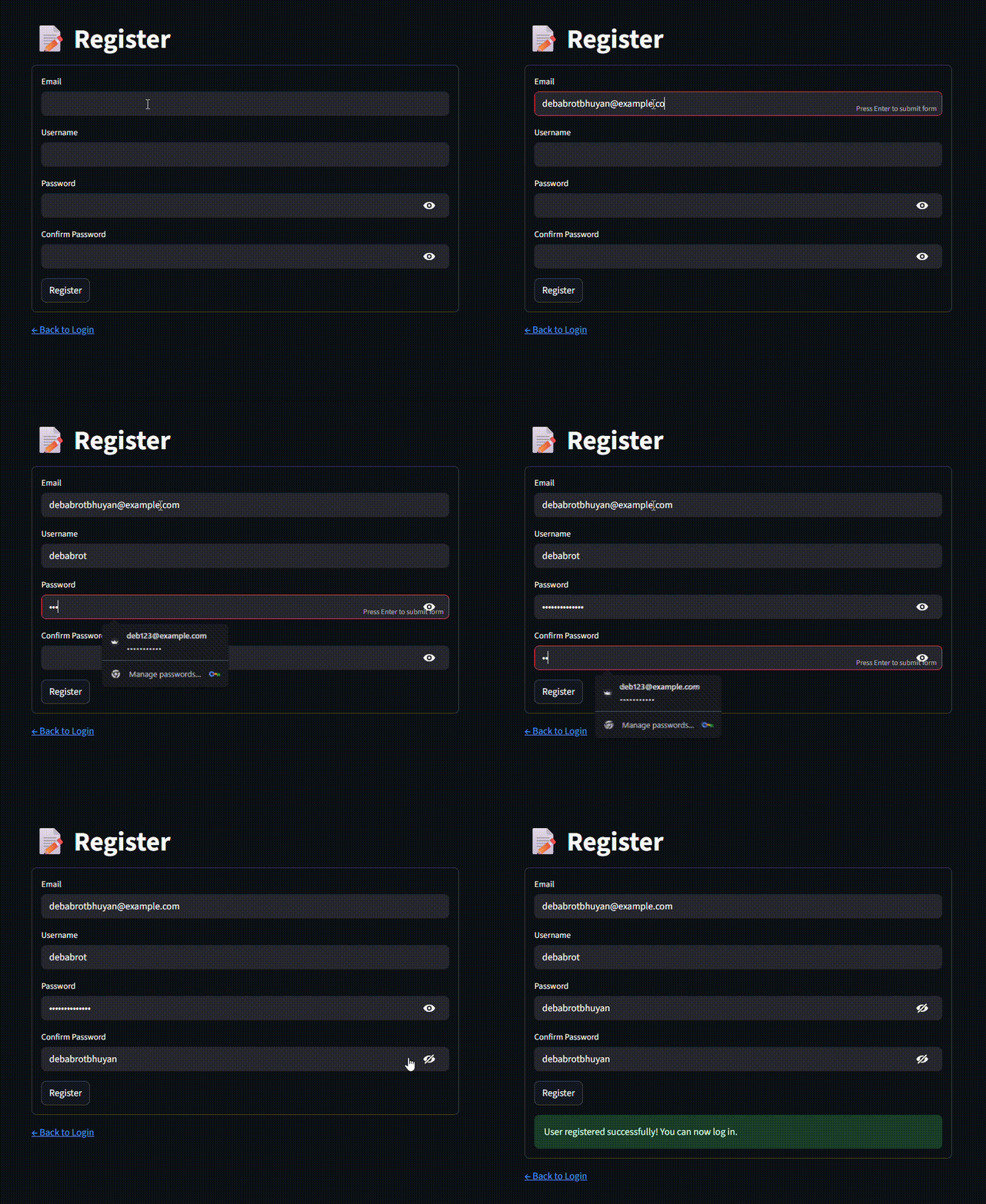
1. 🔹 User Registration
New users can sign up with a valid email and strong password.
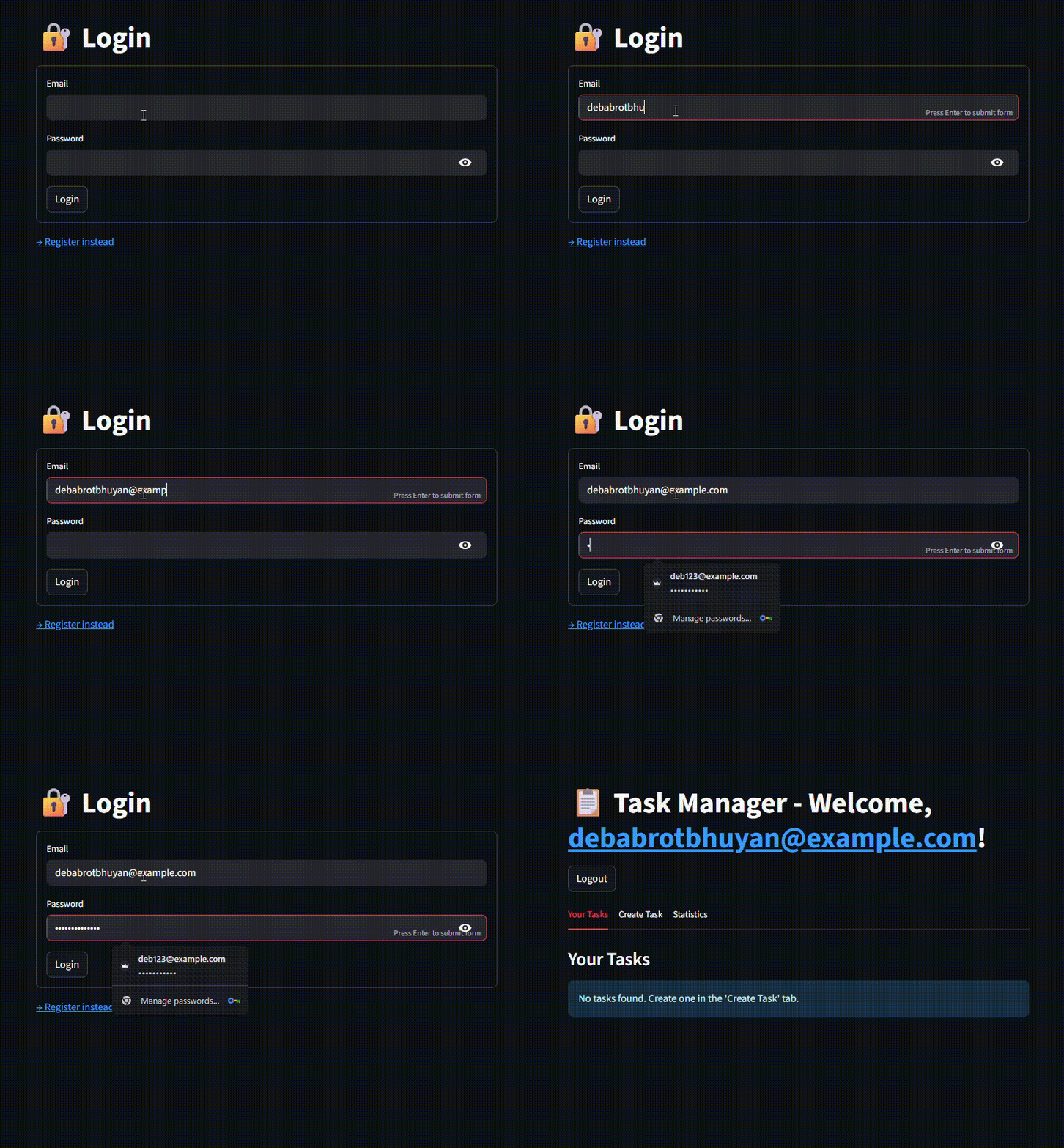
2. 🔹 Login & Authentication
Users log in and receive a secure JWT access token. No sessions, no cookies — just stateless, verifiable tokens.
3. 🔹 Create & Manage Tasks
Once logged in, users can create, view, and manage their tasks in a clean, responsive Streamlit UI.
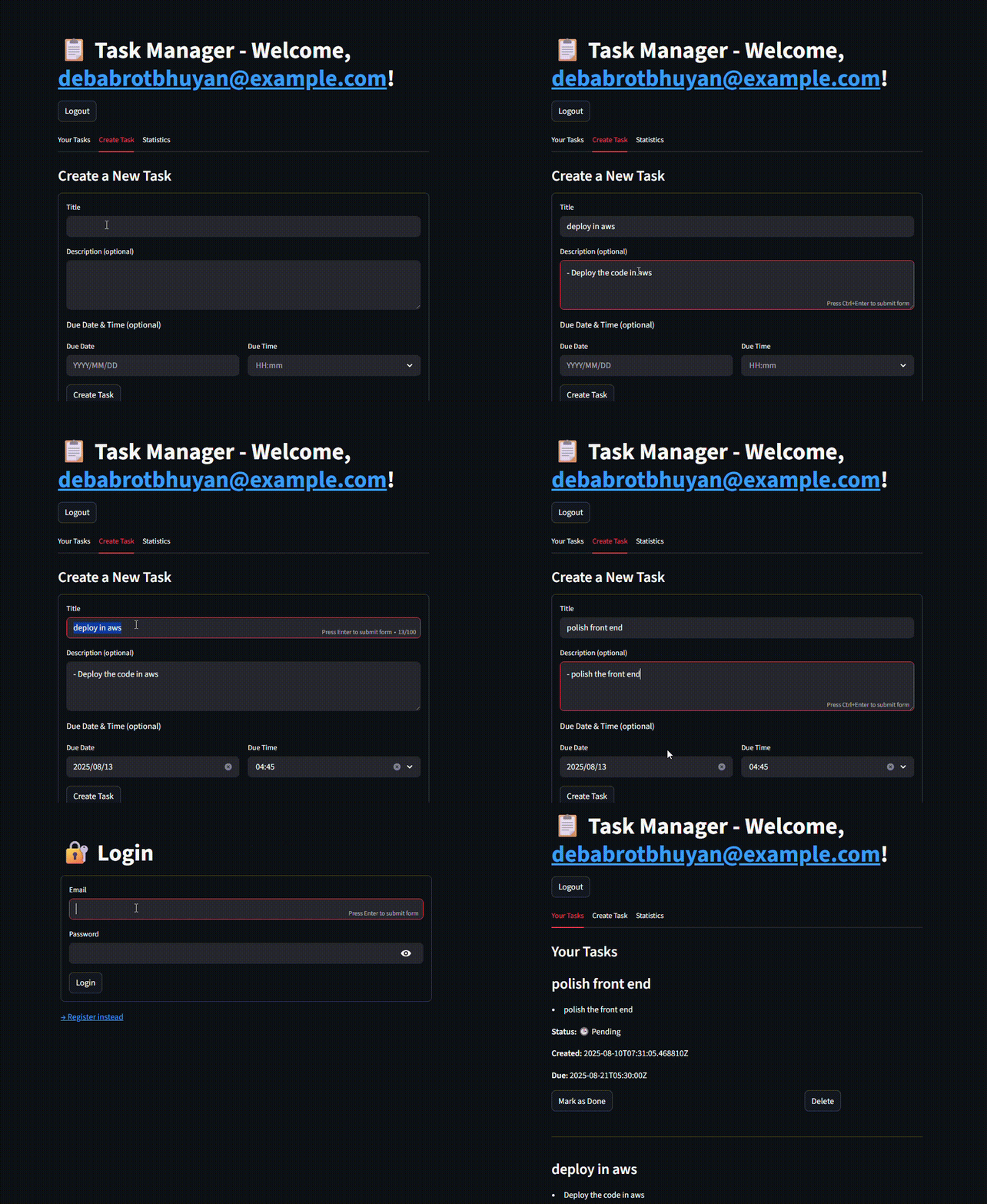
Note: These GIFs are part of the project repo — feel free to explore the real thing!
💡 Why This Matters
You might think: “Another task app? Really?”
But here’s the truth: CRUD + Authentication is the foundation of 90% of web apps.
Whether you’re building a note-taking app, a CRM, or a SaaS platform — you’ll need:
- User management
- Data persistence
- Secure access control
- API design
TaskFlow gives you all of that — in a simple, understandable, and extendable way.
And because it’s containerized with Docker and Makefile, you can spin it up in seconds — no dependency hell, no “it works on my machine” excuses.
🛠️ Try It Yourself (It’s Easy!)
Want to run TaskFlow locally? Here’s all it takes:
git clone https://github.com/debabrot/TaskFlow
cd TaskFlow

# Build and start backend (PostgreSQL + FastAPI)
make up-build

# In another terminal, launch the frontend
# Create virtual environment (optional but recommended)
python -m venv .venv
source .venv/bin/activate

# Install Streamlit
pip install streamlit

# Launch the frontend
streamlit run frontend/app/main.py
That’s it.
You’ll have:
- FastAPI running on
http://localhost:8000(with live docs at/docs) - PostgreSQL database managed via Docker
- Streamlit frontend on
http://localhost:8501
👉 GitHub Repo: github.com/debabrot/TaskFlow
🔮 What’s Next?
TaskFlow was just the beginning. Now that I’ve mastered the fundamentals, I’m extending it with:
- Multi-tenancy – So teams or organizations can have isolated workspaces
- Role-Based Access Control (RBAC) – Admin, editor, viewer roles
- HMAC request signing – For enhanced API security
- Better frontend – Maybe React, or keep Streamlit for prototyping?
This project proved something powerful:
You don’t need to be a backend expert to build like one.
You just need curiosity, a clear goal, and the willingness to break things — and fix them.
🌱 Final Thought
“Building TaskFlow wasn’t just about managing tasks — it was about mastering the fundamentals of modern backend development.”
If you’re coming from a data science or analytics background, you probably know Python well — for pandas, scikit-learn, maybe even Streamlit dashboards.
But when I first saw Pydantic models like this:
class UserCreate(BaseModel):
    email: EmailStr
    password: str
…I blinked. Twice.
“What is this alien syntax?” I thought. “Since when did Python get types?”
That moment sparked a journey — one that led me to dive deep into microservices, APIs, authentication, databases, and security. And the result? TaskFlow: a full-stack, production-style task management microservice built with FastAPI, PostgreSQL, JWT, and Streamlit.
This wasn’t just a side project. It was my crash course in modern backend development — and I’m excited to share it with you.
From Pydantic confusion to JWT clarity, from ORM uncertainty to SQLAlchemy confidence — this project transformed how I see software.
If you’re a data scientist, analyst, or junior dev looking to level up your full-stack skills, start small. Build something real. Break it. Fix it. Repeat.
And who knows? Your next side project might just teach you more than any tutorial ever could.
💬 Thoughts? Questions? Want to contribute or suggest features?
Let’s chat on GitHub or LinkedIn!
Star the repo if you found it helpful:
⭐ github.com/debabrot/TaskFlow